• English
  • 简体中文
  • 繁體中文
  • Tiếng Việt
  • ไทย
  • Indonesia
Subscribe
Real-time News
The yield on Japans 20-year government bonds rose 1.5 basis points to 3.785%.Market news: U.S. Middle East envoy Witkov will travel to Moscow this week after holding discussions with Ukrainian officials in Oslo.October 20th - According to The Washington Post, officials revealed on Monday that the Trump administration has not yet approved the transfer of interceptor missiles to Ukraine to defend against Russian missile and drone attacks. This comes amid a period of increasingly friendly relations between Trump and Russia, coupled with escalating criticism of Ukraine. According to a U.S. official and three other sources familiar with the matter, at least some of the Patriot air defense system interceptors were originally provided by friendly nations to Ukraine, but the transfer requires approval from U.S. Defense Secretary Peter Hegseth. Because these weapons are U.S.-made, under foreign military sales agreements, the transfer of such weapons to third parties by other countries must be approved by the U.S. government; therefore, the U.S. retains final approval authority. A Ukrainian official revealed last week that Ukraines existing stockpile of interceptor missiles is reduced to only a handful. Officials stated that Hegseth has not formally rejected the transfer request, but the necessary approval procedures have not yet been completed. Meanwhile, he continues to approve some U.S. aid to Ukraine.According to AXIOS: U.S. Defense Secretary Hergsays made a surprise visit to Israel and met with Israeli Prime Minister Netanyahu.Micro-Intelligence announced on the Hong Kong Stock Exchange that it plans to issue 37.27 million H shares for its Hong Kong listing, with an issue price range of HK$16.63/share to HK$21.46/share. Trading is expected to begin on the Hong Kong Stock Exchange on October 28.

Oil Prices Climb As The EU Bans Most Russian Oil Imports

Charlie Brooks

May 31, 2022 11:42

o2.png


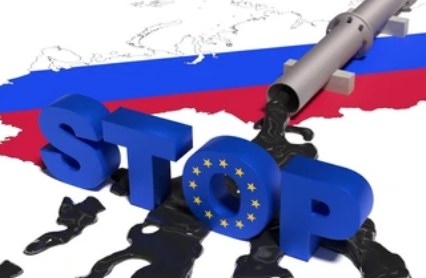
Oil prices increased on Tuesday as the European Union (EU) agreed to reduce its oil imports from Russia by the end of 2022, fueling fears of a tightening market already stressed for supply due to rising demand ahead of the peak summer driving season in the United States and Europe.


At 00:54 GMT, Brent crude futures for July, whose contract expires on Tuesday, rose 33 cents to $122.50 a barrel. The more popular August contract increased 33 cents to $117.93.


Futures contracts for U.S. West Texas Intermediate (WTI) crude were trading at $117.31 a barrel, an increase of $2.24 from Friday's closing. Due to a U.S. holiday, there was no settlement on Monday.


European Union leaders agreed in principle to reduce oil imports from Russia by 90 percent by the end of 2022, breaking a stalemate with Hungary over the bloc's heaviest sanction against Moscow since the invasion of Ukraine three months ago.


Due to the fact that the market has already factored in the supply limits, according to some analysts, oil price improvements may be modest.


SPI Asset Management Managing Partner Stephen Innes told Reuters that the market had "already factored in EU self-sanction and much less Russian oil moving to Europe this year"


Innes continued, "I believe the market is pricing in some more Asia demand via China; nevertheless, the glaring issues are the soaring gasoline prices at the pump, which could lead to some demand destruction over the driving season."


Following the removal of COVID-19 restrictions, China's demand is anticipated to increase. Shanghai has announced the end of its two-month lockdown and will permit the vast majority of residents in China's largest metropolis to leave their homes and drive cars beginning Wednesday.


On the production side, OPEC+ is expected to adhere to its agreement from last year at its meeting on Thursday, with a moderate July output rise of 432,000 barrels per day, according to six sources from OPEC+. This is in response to Western calls for a more rapid increase to curb skyrocketing prices.


The Organization of the Petroleum Exporting Countries and its allies, led by Russia, argue that the oil market is in equilibrium and that recent price increases are unrelated to underlying fundamentals.


In 2022, oil prices on both sides of the Atlantic reached their highest level in more than a decade and are up more than 55 percent so far in 2022.