• English
  • 简体中文
  • 繁體中文
  • Tiếng Việt
  • ไทย
  • Indonesia
Subscribe
Real-time News
Market news: Explosions were heard in the Saudi capital.October 19th - According to a document seen by Reuters, Qatar plans to build two power plants in Lebanon over the next three years and sign a 20-year liquefied natural gas (LNG) supply agreement under a proposal aimed at revitalizing Lebanons struggling power sector. Lebanons energy sector is at the heart of the countrys financial and economic woes. Currently, the countrys state-owned power company supplies electricity for only a few hours a day, with the remainder coming from expensive private diesel generators. The Qatari prime minister visited Lebanon last week and publicly pledged to help revitalize the countrys power sector. According to the obtained draft proposal, the plan "covers gas-fired power generation, LNG supply and regasification, renewable energy, battery storage, and regional power interconnection." The document states: "The plan aims to attract private capital or project financing without requiring upfront capital expenditure from the Lebanese public budget; payment obligations and guarantees are still subject to negotiation." An informed source indicated that the blueprint, titled the "National Integrated Energy Investment Plan," still requires approval from both governments and may be subject to revisions. They anticipate an implementation period of three years if approvals proceed smoothly.According to the Washington Post, the United States will extend the Temporary Protected Status (TPS) for approximately 100,000 Ukrainians.Saudi Arabias civil defense ministry has issued an alert regarding potential dangers in Riyadh.Iranian Foreign Minister Araqchi: Tehran welcomes any solution that can guarantee regional security without the intervention of external forces.

U.S. Treasury to Release Tornado Cash Assets Back to Some Investors

Cory Russell

Sep 14, 2022 14:06

微信截图_20220914105034.png

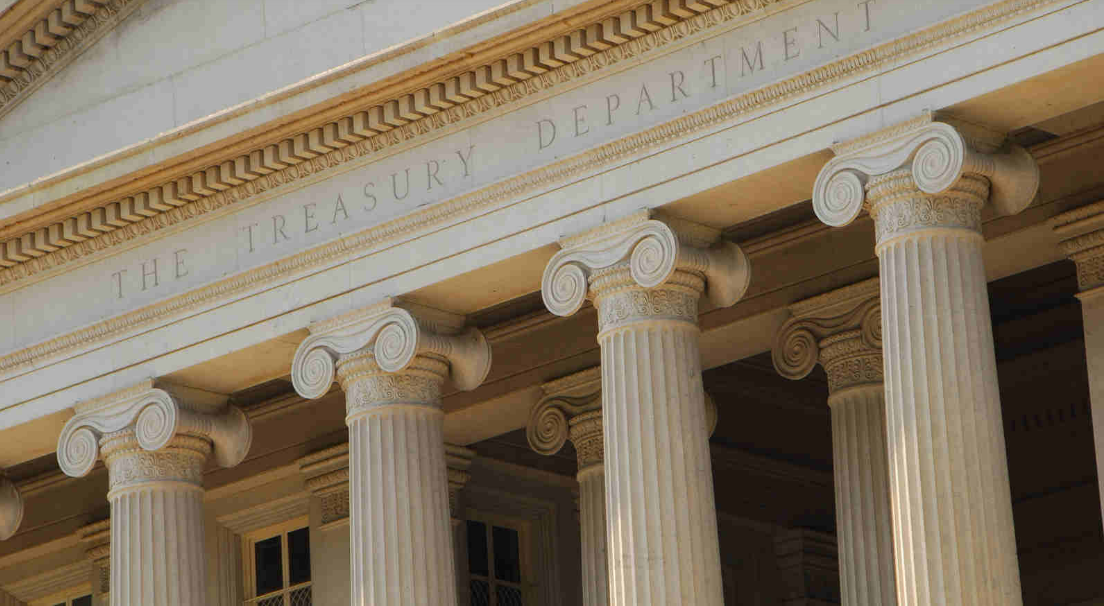
The U.S. Treasury Department is swiftly establishing itself as a rival in the cryptocurrency industry.


With its crypto penalties, the agency has already become the summer's biggest story. These penalties, which targeted Tornado Cash, sparked a lot of discussion about free speech and privacy in the industry. They're now generating additional discussion since the Treasury has recently published a new, contentious procedure for releasing assets that have been frozen in the project.


There are several things about blockchain anonymity that the authorities could be worried about.


Cryptocurrency has already received harsh criticism from legislators for supporting the drug trade and other criminals while undermining conventional banks. Additionally, the crypto industry provides a platform for issues like tax evasion and the annual billion-dollar loss to investors caused by crypto thefts and frauds.


As a result, law enforcement organizations have turned their attention to the cryptocurrency mixer Tornado Cash. Crypto mixing has several acceptable applications. However, it is notorious for its part in the laundering of money that hackers have stolen. Even more recently, it was discovered that the Lazarus Group, a group of state-sponsored hackers from North Korea, utilized Tornado Cash.


Therefore, it is not shocking that the Treasury decided to approve the proposal. But it's also upsetting a lot of cryptocurrency enthusiasts, who claim that legalizing computer code violates the First Amendment. Investors who utilized Tornado Cash for their own legal needs are even sponsoring a lawsuit against the Treasury using Coinbase (NASDAQ:COIN), claiming that the penalties violate their right to privacy.

Cash Assets from the Tornado Will Be Returned Through a Licensing Program

Already contentious enough are the Tornado Cash punishments. However, the controversy over how the Treasury is managing the fallout from the penalties may now be much worse. A strategy to restore assets to Americans was recently outlined by the government. It very much does not, however, include upholding users' privacy rights.


Tornado Cash was sanctioned by the US government, however it didn't merely bar investors from utilizing the service. Thousands of dollars' worth of cash were also restrained by the sanctions inside of it. The penalties resulted in the blacklisting of dozens of wallet addresses, freezing assets in place.


As a consequence of the freezes, initiatives like Circle's USDCoin (USDC-USD) are suffering. 75,000 USDC are now mired in uncertainty.


The Treasury is releasing a method for recovering these assets today. Investors who made deposits before the sanction date of August 8 are qualified to retrieve their money, according to a FAQ made public by the organization. However, in order to do so, these investors must be subject to American law. Additionally, they must submit an application for a unique license to the Treasury's Office of Foreign Assets Control (OFAC).


The Treasury's penalties have come under fire for limiting blockchain privacy. Users are now entirely compelled to dox themselves due to the licensing application that is necessary to obtain assets. Users will also need to provide the OFAC their wallet addresses, transaction hashes, and the total amount of each cryptocurrency they have placed, in addition to their complete legal names and addresses.


The Tornado Cash scandal involving the Treasury Department was already quite divisive at this stage.


But by compelling users of a privacy service to fully identify themselves and their blockchain-related actions to the government, the agency has only served to stoke the flames.