• English
  • 简体中文
  • 繁體中文
  • Tiếng Việt
  • ไทย
  • Indonesia
Subscribe
Real-time News
On October 18, Houthi military spokesman Yahya Sarreya stated that in the past 24 hours, Saudi warplanes, using F-15 and Typhoon fighter jets, launched 53 airstrikes from air bases in Khamis Mushait and Taif, targeting civilian targets in the Yemeni capital Sanaa, as well as the provinces of Taiz, Ib, Lahji, Saada, and Amran, causing numerous casualties, mostly women and children. Since Saudi Arabia escalated its military operation in Yemen, the total number of Saudi airstrikes and missile attacks has reached 2,542.Houthi military spokesman Yahya Sarreya: In the past 24 hours, Saudi fighter jets have carried out 53 airstrikes on the capital Sanaa and the provinces of Taiz, Ibu, Lah, Saada and Amran, targeting civilian facilities.On October 18th, the Russian Ministry of Defense reported that on the 17th, Russian forces seized control of eight settlements in Kharkiv and other areas in the past day. Russian forces also attacked Ukrainian military transportation infrastructure, drone storage facilities, and temporary deployment points. Russian air defense systems shot down 654 Ukrainian fixed-wing drones and one HIMARS rocket, while the Black Sea Fleet destroyed one Ukrainian naval unmanned surface vessel in the Black Sea. The General Staff of the Ukrainian Armed Forces reported on the 17th that in the past day, the Ukrainian Air Force, missile units, and artillery attacked Russian personnel assembly areas, drone command posts, and other targets, destroying one Russian tank, two armored vehicles, and 1,396 drones, among other weapons and equipment.Iraqi government statement: Iraqi Prime Minister Zaidi has instructed the establishment of an investigation committee to investigate the explosion at an arms depot inside the headquarters of the Popular Mobilization Forces in Baghdad.On October 18, the U.S. Embassy in Riyadh issued another security warning to American citizens in Saudi Arabia on October 16, urging them to exercise caution and consider the possibility of flight cancellations and the closure of Saudi Arabias airspace. Washington has issued multiple warnings about the security situation in Saudi Arabia in recent weeks.

Why Are Big Oil Executives Dumping Stock Worth Millions Of Dollars?

Charlie Brooks

Apr 25, 2022 10:00

B2.png


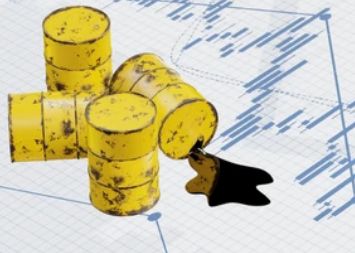
Senator Elizabeth Warren and her fellow Big Oil critics may have obtained tangible evidence that the oil industry benefits directly from the supply-demand imbalance: Big Oil executives are selling millions of dollars' worth of stock in their companies.


Bloomberg estimates that the CEO of Hess Corp. sold stock worth $85 million in the first quarter alone, while the CEO of Marathon Oil sold $34.3 million. According to Bloomberg, more executives sold than acquired shares in their companies in the entire industry.


Perhaps this will infuse Senator Warren's campaign against Big Oil with new vigor. The senator is accusing Big Oil of stifling output increases in order to maintain high pump prices and pad their own coffers. Sen. Warren was one of the sponsors earlier this year of a bill proposing a windfall tax on Big Oil companies for profits generated by the increase in international oil prices.


Additionally, legislators did not stop there. The House Energy and Commerce Committee summoned the CEOs of a dozen Big Oil companies earlier this month for a hearing titled "Gouged at the Pump: Big Oil and America's Pain at the Pump."


Big Oil explained that it is not producers who set retail fuel prices across filling stations but rather legislators who do so by attributing the higher oil prices to the Biden administration's restrictive energy policies and the Ukraine war. Numerous shortages were also noted as contributing to the oil price increase that is causing Democrats headaches.


Nonetheless, congressional Democrats and the White House may view the news of Big Oil executives selling millions of dollars' worth of stock as good news. Bloomberg reports that the selling could be a warning that a price decrease is imminent.


According to the data on stock sales, executives frequently increase sales of their own stock when they anticipate a decrease in the price. Typically, the most direct reason for a fall in oil stocks is a decline in oil prices. The issue is where this drop would originate.


The crisis in Ukraine does not appear to be coming to an end anytime soon, and the European Union is considering imposing an energy embargo on Russia in response to Ukrainian government pressure. The bloc is currently conducting an impact assessment of such an embargo in an attempt to sway hesitant members, the largest of which is Germany—a significant oil and even greater gas importer from Russia.


It's safe to conclude that no oil embargo will be implemented in the next couple of weeks, which means that one tailwind for oil prices will likely materialize later in the year, if at all.


Meanwhile, Russian oil production is declining as a result of the sanctions. This implies that less oil is being delivered to people in need, with the exception of the two largest and most populous Asian economies, which are swallowing up cheap Russian crude.


"Historically, oil CEOs have been extremely adept at maximizing value through timely stock sales," Ben Silverman, head of research at VerityData, told Bloomberg in an interview. "The lesson here is that the cycle will be brief."


While this may be a message, the underlying question remains: how will oil prices fall? The United States producers remain cautious about their production expansion plans; Brazil has lofty expectations, but they will take time to materialize; and the United Kingdom is warming to the concept of increased domestic oil production, but not in amounts sufficient to affect international pricing.


The Iran deal is still stuck—the most recent update stated that the Iranian side rejected a US request for sanctions relief. The icing on the pricing cake was how Saudi Crown Prince Mohammed bin Salman literally yelled at Biden's national security adviser this week, telling him that Washington could forget about the Saudis increasing oil production to drop prices.


As a result, no Iranian oil will arrive. Neither OPEC nor non-OPEC oil is on the way. The United States' output is increasing slowly and will add fewer than 1 million barrels per day this year. Smaller producers could scale up, but it is unclear whether they can do it as quickly as the Saudis and Emiratis. Most likely, the answer is no.


In other words, often, executives of Big Oil selling their own stock signals the end of the price boom. However, in this case, there may be further reasons for the sales, such as the Federal Reserve's rate hike plans, which are becoming increasingly aggressive in the face of persistent inflation pressure. Aggressive monetary policy results in greater borrowing costs, which are detrimental to any business and its stock.